
Porcelain Countertops: Pros, Cons and What to Know
An honest look at a very hard, low-maintenance surface.
The short answer: porcelain countertops are very hard, very dense and almost non-porous, which makes them one of the lowest-maintenance surfaces you can put in a kitchen. They are not perfect, though. Thin slabs need careful fabrication, edges can chip, and the look is different from natural stone.
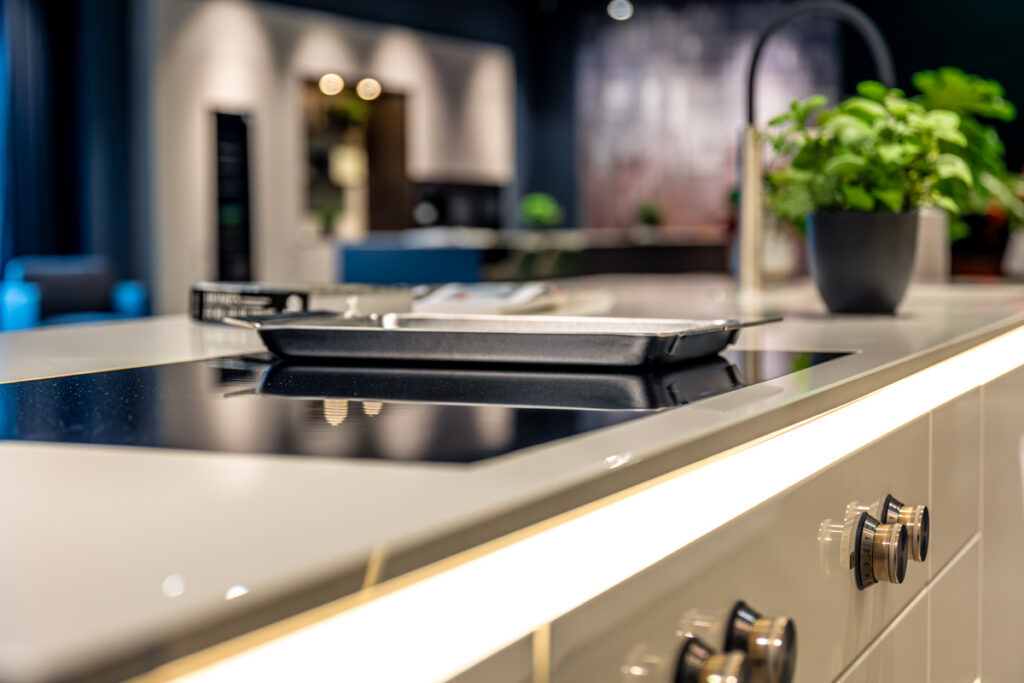
What Are Porcelain Countertops?
Porcelain countertops are made from large slabs of porcelain, a fine clay material fired at very high temperatures until it becomes dense and hard. The surface can be printed to look like marble, granite, concrete or plain solid colors. Unlike natural stone, every slab is manufactured, so the pattern is consistent and predictable. Still comparing? See our guide to granite vs quartz vs marble countertops or browse the materials we use.
The Pros of Porcelain Countertops
Here is where porcelain stands out.
Heat and UV Resistant
Hot pans will not scorch the surface, and color does not fade in sunlight, which is why it is popular outdoors.
Scratch Resistant
Porcelain is very hard, so everyday knife and cookware contact is rarely a problem.
Stain Resistant
It is almost non-porous, so wine, coffee and oil do not soak in.
No Sealing
Unlike many natural stones, porcelain does not need periodic sealing.
The Cons to Consider
Porcelain is not right for every kitchen. Here is what to weigh.
01
Edges Can Chip
The material is hard but can be brittle, and a hard impact on a corner or edge may chip it.
02
Specialized Fabrication
Large, thin slabs need careful handling, cutting and installation, so not every shop works with them.
03
Fewer Edge Options
Detailed profiles are harder to achieve than on granite or quartz. See our guide to countertop edge profiles.
04
Harder to Repair
If a chip does happen, it is harder to repair invisibly than on many natural stones.
05
Printed Patterns
On some slabs the veining sits on the surface, so cut edges may look different from the top.
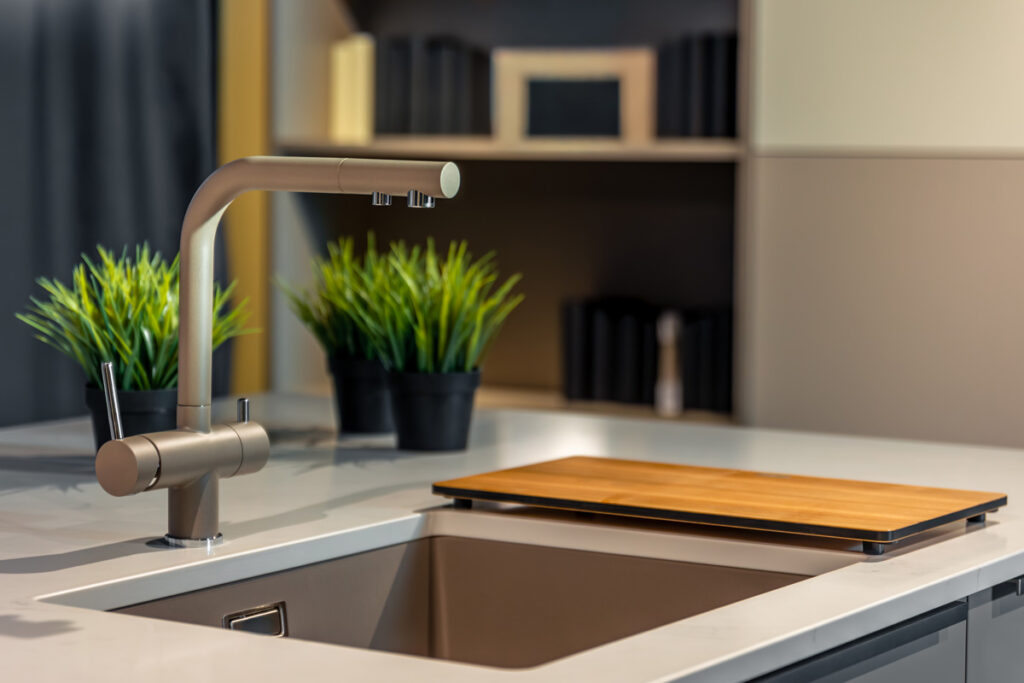
Porcelain vs Granite, Quartz and Marble
Compared with granite, porcelain needs no sealing and looks more uniform, while granite gives one-of-a-kind natural patterns and is more forgiving at the edges. Compared with quartz, porcelain handles heat and sun better, while quartz is easier to fabricate with decorative edges. Compared with marble, porcelain resists stains and etching far better, but cannot match the depth of real stone.
Where Porcelain Works Best
Busy family kitchens, sunny spaces and bathrooms, plus outdoor kitchens where sun and temperature swings are a concern. Read more about outdoor kitchen countertops in Michigan winters and bathroom vanity tops.
Care and Cleaning
Day to day, warm water, mild soap and a soft cloth are usually enough. Avoid harsh abrasives, and use a cutting board to protect your knives. For general advice, see how to clean and care for your countertop.
Is Porcelain Right for Your Kitchen?
Porcelain suits you if you want low maintenance, a clean modern look and strong heat and stain resistance. If you love natural variation or want a decorative edge, granite or quartzite may be a better match. Compare it with the other kitchen countertops we offer.
Ask Us About Porcelain
Ask us whether porcelain is available for your project, and we will help you compare it with granite, quartz and quartzite.
Contact Us for a Free Estimate →Porcelain Countertops FAQ
Are porcelain countertops durable?
Yes. They resist heat, scratches, stains and UV light very well. The main weak point is the edges, which can chip on a hard impact.
Do porcelain countertops need to be sealed?
No. Porcelain is almost non-porous, so it does not need sealing like many natural stones.
Can porcelain countertops be used outdoors?
Often, yes. Porcelain handles sun and temperature changes well, which is why it is a popular choice for outdoor kitchens.
Are porcelain countertops better than quartz?
It depends on your priorities. Porcelain handles heat and sun better, while quartz is easier to fabricate with decorative edges.
Do porcelain countertops have a thick edge?
Slabs are often thin, so a thicker look is usually built by mitering or layering the edge. Ask us what is possible for your design.
Thinking About Porcelain?
Tell us about your project and get a free, no-obligation estimate.