
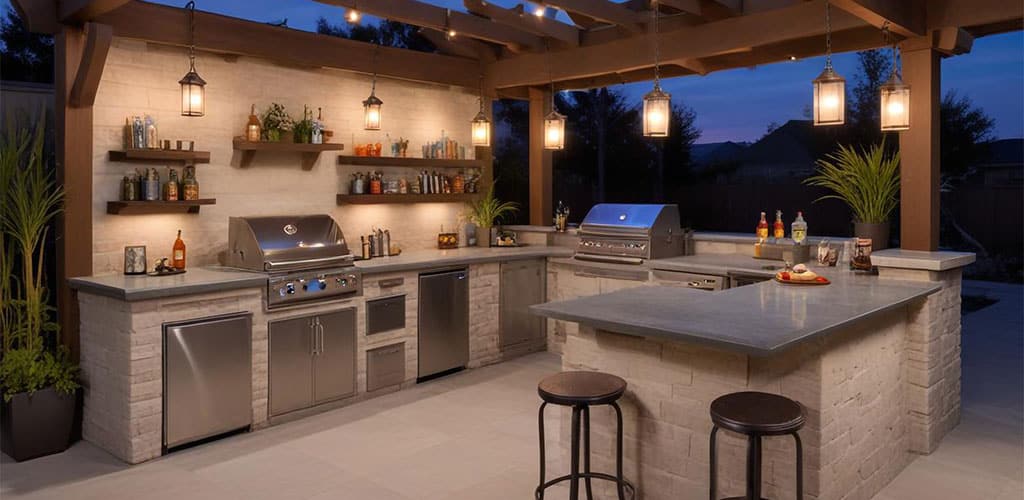
Outdoor Kitchen Countertops in Michigan: What Survives the Winter
An outdoor kitchen sounds great in July. The real test is whether it still looks great after a Michigan winter.
Not every countertop material that works beautifully indoors can handle what a Michigan outdoor kitchen goes through: freezing temperatures, repeated freeze and thaw cycles, and months of moisture and snow. Here’s what actually holds up, and what to avoid.
Why Winters Are So Hard Outdoor Kitchen Countertops In Michigan
The biggest threat isn’t the cold itself. It’s what’s called the freeze-thaw cycle.
Water gets into tiny pores in a stone’s surface, then freezes. Frozen water expands, which puts pressure on the stone from the inside. Do that dozens of times over a Michigan winter, and even solid-looking stone can eventually crack.
The denser and less porous a material is, the better it resists this process.
Granite: A Reliable Choice
Granite is one of the most dependable materials for outdoor use in cold climates. It’s dense, doesn’t absorb much water, and holds up well through repeated freeze-thaw cycles.
Proper sealing still matters outdoors, even more than it does inside, since it’s the sealant that keeps water from soaking in to begin with.
Quartzite: Similar Durability, Different Look
Dense quartzite performs almost as well as granite outdoors, while offering a different, often more dramatic, natural look.
Like granite, quartzite should be sealed for outdoor use, and it holds up well through Michigan’s temperature swings.
Why Quartz Doesn't Belong Outside
Quartz is a fantastic indoor material, but it’s genuinely not built for full outdoor exposure. Quartz countertops are engineered using resin, and direct, prolonged sunlight breaks that resin down over time.
The result is fading, discoloration, and sometimes warping, all from UV exposure alone, before winter even becomes a factor. If you love the look of quartz, save it for an indoor kitchen and choose something else for the patio.
Marble and Travertine: Best Left Indoors
Marble is soft and porous compared to granite or quartzite, which makes it a poor match for Michigan winters. Repeated freeze-thaw cycles can crack it, and acidic rain can etch its surface over time.
Travertine has the same problem, often worse. Its natural holes and channels let water in easily, and that trapped water is exactly what causes cracking once it freezes. Both materials are beautiful indoors, but neither is a good fit for a Michigan patio.
Porcelain: A Strong Modern Option
Porcelain has become a popular outdoor choice in colder climates for good reason. It’s extremely low in porosity, resists UV fading, and doesn’t need sealing at all.
It’s worth considering if you want something that looks sleek and modern while shrugging off Michigan’s weather with very little maintenance.
A Few Extra Tips for Michigan Outdoor Kitchens
- Seal natural stone regularly. For granite or quartzite, resealing before winter each year adds an extra layer of protection.
- Cover your outdoor kitchen when possible. Even durable materials last longer with less direct exposure to snow and standing water.
- Choose lighter colors if the space gets full sun. Very dark stone can get uncomfortably hot to the touch during summer cookouts.
- Ask about outdoor-specific fabrication. Outdoor countertops often need different support and edge treatment than indoor ones, so professional installation matters even more here.
Planning an Outdoor Kitchen?
Building for Michigan weather takes the right material and the right fabrication approach from day one. We help homeowners throughout Oakland, Macomb, Wayne, St. Clair, Livingston, and Genesee counties choose materials that actually hold up, indoors and out.
Frequently Asked Questions
What's the best countertop material for an outdoor kitchen in Michigan?
Granite and dense quartzite are the most reliable choices, thanks to their low porosity and strong resistance to freeze-thaw damage. Porcelain is also an excellent, low-maintenance option.
Can I use quartz for an outdoor kitchen?
It's not recommended. The resin used in quartz breaks down under prolonged UV exposure, leading to fading and discoloration well before winter weather becomes a factor.
Does granite need to be sealed differently for outdoor use?
It needs the same type of sealing as indoor granite, just applied more diligently. Since outdoor granite faces constant moisture exposure, staying on top of the resealing schedule matters more.
Why is marble a bad choice for outdoor kitchens?
Marble is softer and more porous than granite or quartzite, making it prone to cracking from freeze-thaw cycles and etching from acidic rain, both common issues in Michigan's climate.
Is porcelain a good alternative to natural stone outdoors?
Yes. Porcelain resists UV fading, doesn't need sealing, and holds up well in cold, wet climates, making it a strong low-maintenance option for a Michigan outdoor kitchen.