Bathroom Vanity Tops: What to Choose and What to Avoid
The short answer: for most bathrooms, quartz and granite are the safest choices for bathroom vanity tops, since both handle water, toothpaste and daily use well. Marble looks beautiful but needs more care, and quartzite is a strong option if you want a natural stone look with extra durability. The right pick depends less on the size of the room and more on how the bathroom gets used.
Why Bathroom Vanity Tops Are Different From Kitchen Counters
A vanity top is small, but it works hard. It sits next to a sink all day, deals with constant moisture, and gets hit by products most kitchens never see: toothpaste, hair dye, perfume, makeup remover and cleaning sprays.
The good news is that a vanity needs far less stone than a kitchen. That makes it a great place to choose a premium material you might not use across a whole kitchen.
Granite: Durable and One of a Kind
Granite handles bathroom humidity well and resists scratches and everyday wear. Because it is porous, it needs to be sealed, but a vanity is small enough that resealing is quick.
Every slab is unique, so it is worth seeing the actual piece before you decide. If you like a bit of natural movement and color in the room, granite is a solid pick
Quartz: The Low-Maintenance Choice
Quartz is non-porous, so water and products do not soak in, and it never needs sealing. That makes it a favorite for busy family bathrooms, guest baths and any space where you want to wipe it down and move on.
It also comes in a wide range of colors and patterns with consistent results from slab to slab, which helps if you are matching more than one vanity.
Marble: Beautiful, With Trade-Offs
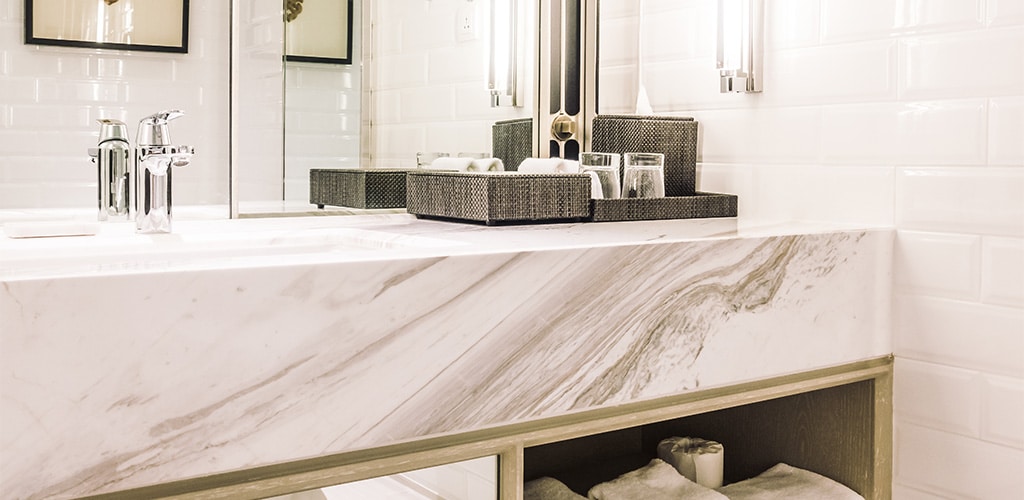
Marble is the classic bathroom look, but it is softer and more reactive than other stones. Acidic products (some cleaners, perfumes, toothpaste and hair products) can etch the surface and leave dull spots.
If you love marble, it can work well in a low-traffic powder room or guest bath. In a daily-use bathroom, expect to be more careful with spills and to reseal regularly.
Quartzite: Natural Look, More Durability
Quartzite offers a veined, marble-like appearance with more hardness and better resistance to etching. It is a nice middle ground if you want natural stone beauty without the extra worry. Like granite, it should be sealed.
What to Avoid
A few things tend to cause problems in bathrooms:
- Unsealed natural stone. Moisture and products can soak in and leave stains.
- Harsh or acidic cleaners. They can dull the finish or damage the sealer. Our guide to cleaning and caring for your countertop covers what to use on each material.
- Leaving products to sit. Nail polish remover, hair dye and acidic products are best wiped up quickly.
- Choosing only by photo. Color and veining look different under bathroom lighting. Always check a real sample.
Polished or Matte for a Vanity?
Polished tops brighten a small bathroom and make colors look deeper, but they show water spots and toothpaste splashes more. A matte finish hides those marks better and gives a softer look. If you are torn, our guide on matte vs. polished countertops explains how each one performs day to day.
Think About the Sink and Layout Early
The sink style affects the cutout, the edge and how the top is fabricated, so it helps to decide on the sink and faucet before the top is made. Bring your vanity cabinet details and sink information when you ask for a quote, so the fit is right the first time.
Chips, Cracks and Etching
Bathrooms are tight spaces where things get dropped. If you notice a chip near the sink or a dull spot from a product, many issues can be repaired. See our guide on what to do if your countertop cracks or has a defect before you decide on a replacement.
See Your Options in Person
Photos only tell part of the story. Browse the materials we use and take a look at our bathroom vanities page to see what is possible, then bring us your vanity size and sink details and we will help you narrow it down.
At American Granite Tops, we work with homeowners throughout Oakland, Macomb, Wayne, St. Clair, Livingston, and Genesee counties.
Frequently Asked Questions
What is the best material for bathroom vanity tops?
Quartz and granite are the most common choices, since both handle moisture and daily use well. Quartz is the lowest maintenance option, while granite offers natural variation and needs periodic sealing.
Is marble a good choice for a bathroom vanity?
It can be, especially in a guest bath or powder room. Marble is softer and can etch from acidic products, so it needs more careful use and regular sealing.
Do bathroom vanity tops need to be sealed?
Natural stone such as granite, marble and quartzite should be sealed. Quartz is non-porous and does not need sealing.
Is a polished or matte finish better for a vanity?
Polished brightens the room and deepens color, but shows water spots and splashes more. Matte hides everyday marks better. It comes down to the look you prefer and how much wiping down you want to do.
Can I use leftover stone from a kitchen project for a vanity?
Sometimes, depending on the size and color of the leftover pieces. Ask your fabricator early, since this needs to be planned before the kitchen top is cut.