
Granite vs Quartzite: What's the Difference?
The short answer: granite and quartzite are both natural stones that make durable, long-lasting countertops. Granite usually shows speckled, grainy patterns, while quartzite is known for softer, flowing veining that often looks like marble. Quartzite is generally harder, but both need sealing, and the right choice comes down to the look you want and how you use your kitchen.
Granite vs Quartzite: Where They Come From
The two stones start in very different places.
Granite forms when magma cools slowly deep underground. That slow cooling creates the crystals, flecks and speckles you see in the stone. If you want the full story, our guide on how stone gets from the quarry to your kitchen walks through it step by step.
Quartzite starts as sandstone. Over time, heat and pressure transform it into a very hard, dense stone, with veining and movement that can look a lot like marble.
How They Look
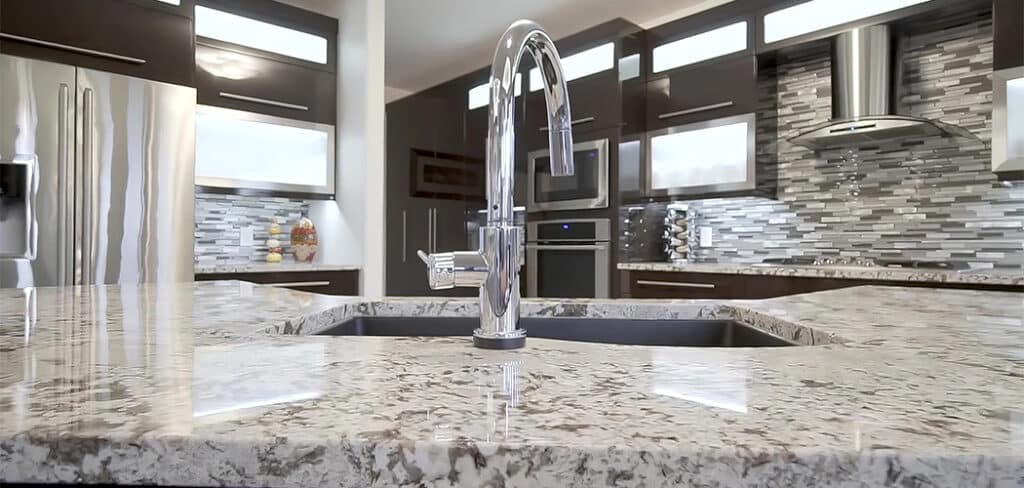
Granite tends to have a more grainy, speckled look, with a wide range of colors from soft neutrals to deep blacks and warm browns. It is also known for strong variation within a single slab.
Quartzite usually has a smoother, more flowing pattern, often in whites, grays and soft earth tones, with long veins and subtle movement. It is a popular choice for homeowners who love the look of marble but want something tougher.
Both are natural, so no two slabs are alike. Photos only tell part of the story, so it is worth seeing the actual slab before you decide.
Durability: Which Is Tougher?
Both are strong choices for a working kitchen.
- Scratches: Quartzite is often harder than granite, so it tends to resist scratching very well.
- Heat: Both handle heat well, though a trivet is still a good habit.
- Chips: Edges and corners on any stone can chip from a hard hit. Granite and quartzite both hold up well with normal use.
The honest answer is that either one will last for many years with the right care. Hardness differs from slab to slab, so ask your fabricator about the specific piece you are looking at.
Maintenance and Sealing
Both stones are natural, so both should be sealed. Sealing helps keep oil, wine and other liquids from soaking in.
A simple test works for either one: put a few drops of water on the surface. If they bead up, the seal is working. If they soak in, it is time to reseal. Day to day, warm water and mild soap are enough, and you can find the full routine in our guide to cleaning and caring for your countertop.
Quartzite can be more resistant to etching than marble, but strong acidic cleaners are still best avoided on both.
A Common Mix-Up: Quartzite vs Quartz
Quartzite and quartz sound alike, but they are very different materials.
- Quartzite is a natural stone, quarried from the earth.
- Quartz is engineered, made from crushed natural quartz combined with resins and pigments. It is non-porous and never needs sealing.
If you are weighing quartz as well, see our comparison of granite vs quartz vs marble.
Outdoor Use
Dense natural stone does well outdoors. Both granite and quartzite handle freeze-thaw cycles better than softer or more porous materials, as long as they are sealed properly. For more detail, read our guide to outdoor kitchen countertops in Michigan.
Which One Should You Choose?
- Choose granite if you like a speckled, natural look, want a trusted material with a wide range of colors, and don’t mind sealing it occasionally.
- Choose quartzite if you love a marble-like look with more hardness, and you are happy to see the exact slab in person before you commit.
- Not sure? Bring photos of your kitchen, your cabinet color and your lighting, and we will help you compare real slabs side by side.
See Both in Person
Every slab is different, so the best way to choose is to see them in your own light. Browse the materials we use and take a look at our kitchen countertops page, then come talk to us about what fits your space.
At American Granite Tops, we work with homeowners throughout Oakland, Macomb, Wayne, St. Clair, Livingston, and Genesee counties.
Frequently Asked Questions
Is quartzite harder than granite?
Often, yes. Quartzite is generally very hard and resists scratching well, but hardness varies from slab to slab, so ask about the specific piece.
Is quartzite the same as quartz?
No. Quartzite is a natural stone. Quartz is an engineered material made from crushed quartz and resins.
Does quartzite need to be sealed?
Yes. Like granite, quartzite is a natural stone and should be sealed. The water-drop test tells you when it is time to reseal.
Which is better for resale, granite or quartzite?
Both are viewed as quality upgrades. Neutral colors with subtle movement tend to appeal to the widest range of buyers.
Can I use granite or quartzite outdoors?
Both can work well outdoors when properly sealed, since they are dense and handle freeze-thaw cycles better than softer stones.